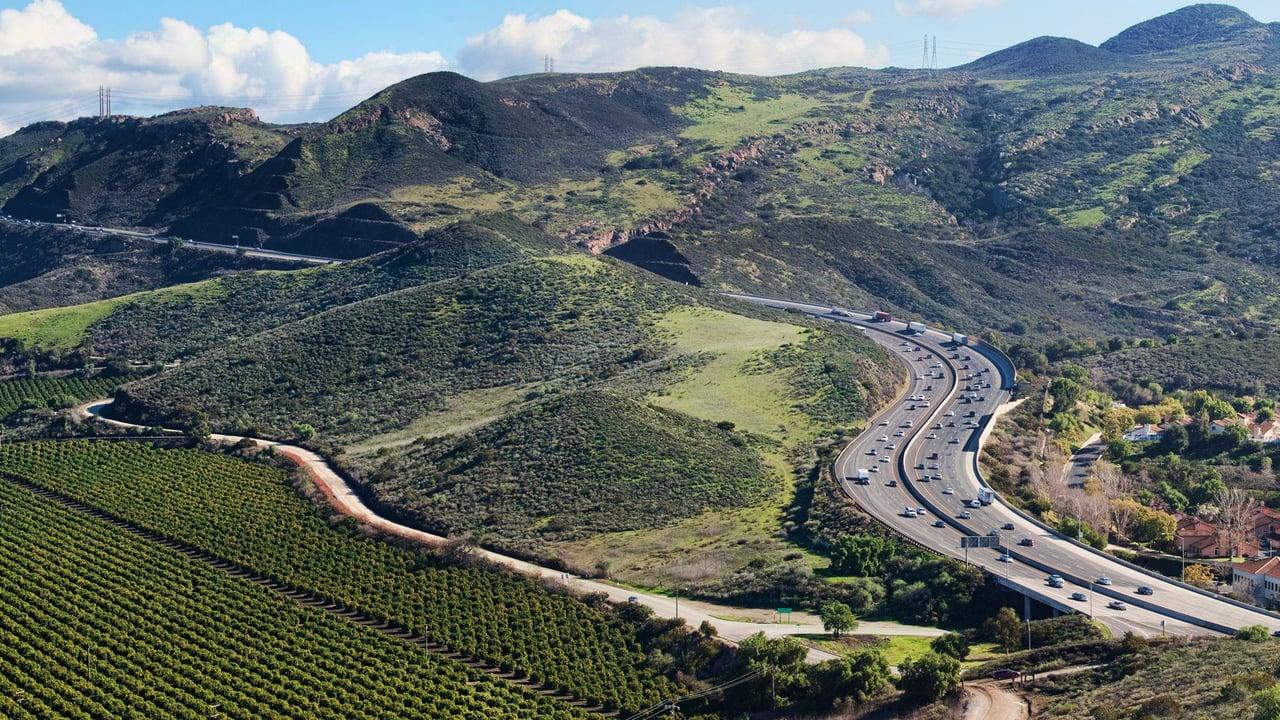
Pull up a map of the Conejo Valley and something interesting happens.
Newbury Park, Thousand Oaks, and Westlake Village almost blend together.
There isn't a dramatic geographic divide between them. You can leave a neighborhood in Newbury Park, drive through Thousand Oaks, and arrive in Westlake Village without ever feeling like you've taken a trip.
Yet ask someone who actually lives here whether the three places are interchangeable.
They're not.
Not even close.
Newbury Park can feel tucked against the mountains and removed from the rest of Southern California.
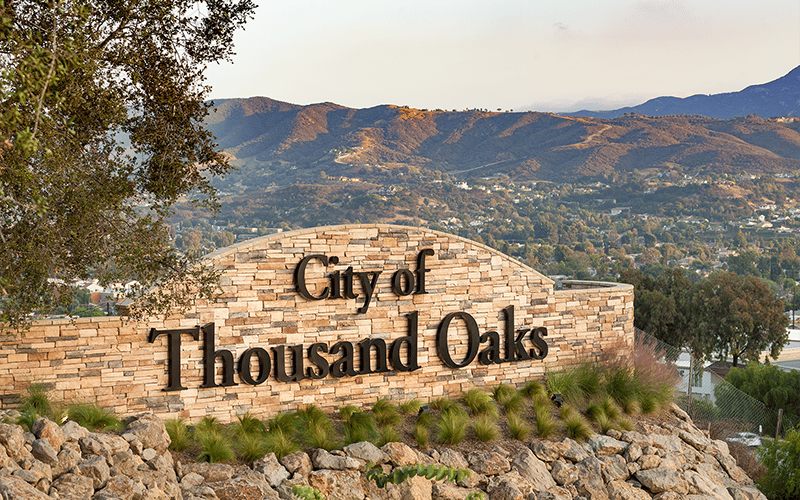
Thousand Oaks feels established, expansive, and remarkably self-contained.
Westlake Village can feel polished, intimate, and increasingly connected to the lifestyle and energy of Los Angeles.
Three neighboring communities.
One valley.
Three very different versions of home.
And for someone considering a move to the Conejo Valley, understanding those differences may matter far more than comparing price per square foot.
Newbury Park: Where the Neighborhood Meets the Mountains
Drive west through Thousand Oaks and into Newbury Park and the landscape begins doing something subtle.
It gets bigger.
Not the buildings.
Everything around them.
The ridgelines become more prominent. Open space feels closer. In neighborhoods like Dos Vientos, the Santa Monica Mountains aren't something you drive somewhere to see.
They're part of the neighborhood.
That distinction says a lot about Newbury Park.
There's a sense that residential life has been tucked into the landscape rather than placed on top of it.
One of the best examples is Dos Vientos Ranch.
For someone seeing it for the first time, getting there is part of the experience. You travel farther from Highway 101, neighborhoods begin replacing commercial corridors, and eventually you're surrounded by hills, trails, parks, and homes.
It feels removed.
For some buyers, that's precisely the attraction.
You're still minutes from Thousand Oaks and the 101, but when you get home, you feel farther away.
Nearby, Rancho Sierra Vista/Satwiwa opens into the Santa Monica Mountains, with trails used by hikers, cyclists, equestrians, and families—and a route through Sycamore Canyon that ultimately descends toward the Pacific.
That's not simply a recreational amenity.
It changes what an ordinary Saturday morning can look like.
Grab coffee at Ragamuffin Coffee Roasters, drive a few minutes toward the trailhead, and suddenly the suburban neighborhood you woke up in feels very far from suburban Southern California.
In Dos Vientos itself, Honey Cup Coffeehouse & Pattiserie - Dos Vientos serves as the kind of neighborhood stop that becomes part of a routine rather than a destination.
That's Newbury Park's appeal in a sentence:
Life can feel smaller while the landscape feels bigger.
Thousand Oaks: The Center of Gravity
Then there's Thousand Oaks.
If Newbury Park feels like the Conejo Valley retreating into the mountains, Thousand Oaks feels like the valley's center of gravity.
This is where the distinction becomes important.
Thousand Oaks isn't one neighborhood personality.
It's many.
Wildwood doesn't feel like Lynn Ranch.
Lynn Ranch doesn't feel like Lang Ranch.
Lang Ranch doesn't feel like North Ranch.
And that variety is one of Thousand Oaks' greatest strengths.
Wildwood
Wildwood is a perfect example of how deeply open space is integrated into life here.
Wildwood Regional Park contains 14 trails covering roughly 17 miles, while the broader Wildwood open-space area encompasses more than 1,700 acres.
For nearby residents, that's not an attraction they visit once a year.
It's the place they walk the dog after work.
It's the Saturday hike.
It's where children grow up seeing the same hills change from brown to green and back again.
That relationship between neighborhood and open space repeats itself throughout Thousand Oaks. The local trail system includes areas around Dos Vientos, Lang Ranch/Woodridge, Los Robles, Wildwood, and numerous other open-space preserves.
Lynn Ranch
Move toward Lynn Ranch and Thousand Oaks shows another side of itself.
The environment feels less conventionally suburban. Properties can feel more individual, streets more established, and the overall atmosphere more rooted in the area's earlier character.
For the buyer who wants Thousand Oaks conveniences but doesn't necessarily want every house on the street to feel cut from the same template, areas like this can tell a very different story.
Lang Ranch and the Eastern Side
Move east again toward Lang Ranch and the experience changes.
Here, proximity to Westlake Village, parks, schools, trails, shopping, and the eastern Conejo Valley becomes a larger part of daily life.
That's what makes saying "I want to live in Thousand Oaks" almost meaningless without asking the next question:
Which Thousand Oaks?
The city is too varied to treat as one housing market or one lifestyle.
Thousand Oaks Is Also Where the Valley Comes Together
The other distinction is convenience.
Newbury Park can intentionally feel removed.
Thousand Oaks generally doesn't.
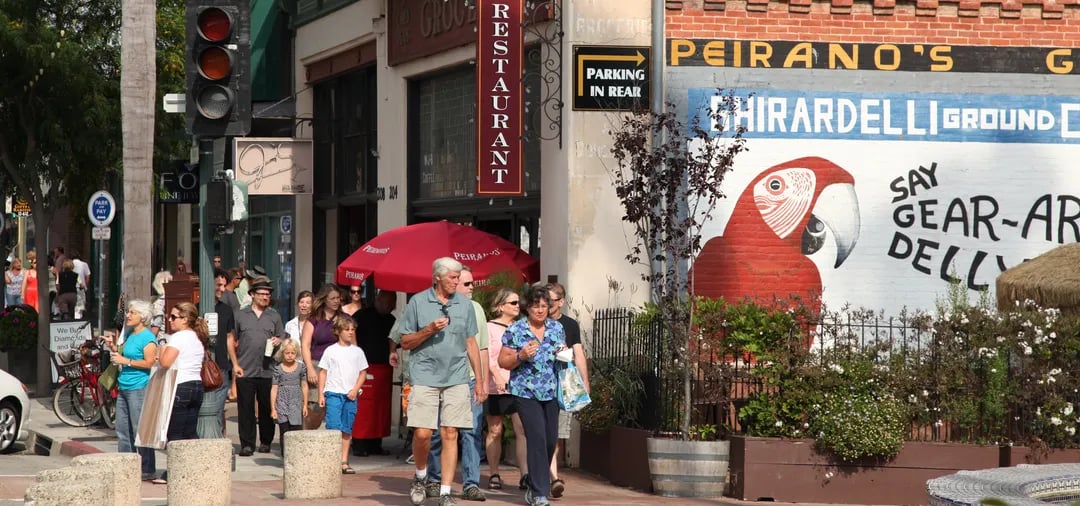
Shopping, restaurants, healthcare, entertainment, parks, schools, and Highway 101 access are woven throughout the city.
The Bank of America Performing Arts Center brings Broadway productions, concerts, symphony performances, speakers, and other programming into the heart of Thousand Oaks.
A few steps away, Gardens of the World offers something completely different—a 4.5-acre cultural garden along Thousand Oaks Boulevard created as a gift to the Conejo Valley.
Then there are the everyday conveniences.
The errands.
Dinner.
Youth sports.
The gym.
The grocery run.
The things nobody photographs when marketing a home but that determine whether living somewhere is easy.
That's where Thousand Oaks excels.
It can give you substantial open space without requiring you to give up the infrastructure of a larger community.
You don't necessarily leave Thousand Oaks to live your life.
Much of your life can happen within it.
Then You Reach Westlake Village
Keep traveling east and the personality changes again.
Westlake Village doesn't announce itself dramatically.
It doesn't need to.
The landscaping becomes part of the experience. The lake begins influencing the geography. Restaurants, offices, neighborhoods, hotels, and retail feel more concentrated.
There's an intimacy to it.
And there's also a noticeable shift toward Los Angeles.
That's partly geographic.
Calabasas is just down the 101. Malibu sits beyond the Santa Monica Mountains. Woodland Hills and the San Fernando Valley are increasingly accessible.
But the difference is also cultural.
Westlake Village occupies an interesting position between Ventura County and Los Angeles County—and the broader Westlake community itself crosses the county line.
That gives the area a personality unlike anywhere else in Ventura County.
It feels like the Conejo Valley.
But it also feels like the beginning of Los Angeles.
Westlake's Version of Lifestyle
You can see the difference in where people gather.
The Stonehaus is a good example.
Part coffee shop, part wine bar, part gathering place, its courtyard, vineyard setting, fireplace, food, and coffee allow the same place to function differently depending on the hour.
Then there's Finney's Crafthouse, whose original Westlake Village location has become the kind of casual neighborhood restaurant where the patio and social atmosphere matter almost as much as what's on the menu.
Those places tell you something about Westlake Village.
There's an emphasis on the experience surrounding the experience.
Dinner isn't necessarily just dinner.
Coffee isn't necessarily a five-minute stop.
The setting matters.
And in residential real estate, the same principle often applies.
Westlake Village Isn't One Market Either
This is where buyers need to be particularly careful with names.
"Westlake Village" can refer to the incorporated city in Los Angeles County, neighborhoods with Westlake Village mailing addresses in Ventura County, and the broader Westlake area people use conversationally.
Then you add nearby North Ranch and Lake Sherwood, and the housing conversation becomes even more nuanced.
North Ranch brings larger homes, established landscaping, golf-oriented communities, and a distinctly upscale suburban environment.
Lake Sherwood moves farther into the hills and into a different level of privacy, exclusivity, and luxury entirely.
A buyer saying, "We like Westlake," may actually be describing several different lifestyles.
That's why local knowledge matters.
The map doesn't explain these distinctions particularly well.
Living here does.
Three Saturday Mornings
Maybe the easiest way to understand these communities isn't through housing statistics at all.
Imagine three Saturday mornings.
Newbury Park
You wake up in Dos Vientos.
The hills are immediately outside.
You grab coffee locally, take the dog toward Rancho Sierra Vista/Satwiwa, and spend the morning on a trail with Boney Mountain in the distance.
You're home before lunch.
Thousand Oaks
You wake up near Wildwood.
There's a morning soccer game.
You hike later, run errands, grab lunch, and perhaps have tickets that evening at the performing arts center.
Everything happens within a relatively tight radius.
Westlake Village
You start with coffee outside at The Stonehaus.
Maybe there's a walk near the lake, lunch with friends, shopping, or dinner on a patio later that evening.
Los Angeles feels accessible.
But you don't particularly feel the need to go there.
None of these lives is objectively better.
That's exactly the point.
What Are You Actually Buying?
This is where the real estate conversation becomes much more interesting.
A home search makes it incredibly easy to compare houses.
Four bedrooms versus five.
2,800 square feet versus 3,200.
Pool versus no pool.
Updated kitchen versus original kitchen.
But those comparisons can create the illusion that buyers are choosing between interchangeable products.
They aren't.
A house in Dos Vientos and a house in Westlake Village may have similar square footage.
The life outside the house won't be remotely the same.
One may prioritize being surrounded by mountains and trails.
Another may prioritize centrality.
Another may want the polished environment and Los Angeles proximity of Westlake.
Another may want an older Thousand Oaks neighborhood with mature landscaping and more individual character.
That's why the best home isn't always the house that wins the spreadsheet.
It's the one sitting in the community that matches the life you actually want.
The Question Buyers Should Ask First
Instead of beginning with:
"Which city is best?"
Try something more useful.
What do you want to see when you leave the house?
How important is immediate trail access?
Do you want restaurants and shopping close by?
Do you commute toward Los Angeles?
Would you rather feel tucked away or centrally located?
Do you prefer a master-planned neighborhood or something more established and individual?
How much does privacy matter?
What do you want an ordinary Tuesday evening to look like?
Those questions will often narrow a Conejo Valley home search faster than another hour spent scrolling listings.
Because Newbury Park, Thousand Oaks, and Westlake Village aren't competing to provide the same thing.
Their differences are precisely what make the Conejo Valley interesting.
The ROGS Perspective
One of the easiest mistakes to make when looking at the Conejo Valley is assuming proximity means similarity.
It doesn't.
Newbury Park, Thousand Oaks, and Westlake Village sit only minutes apart.
But Newbury Park can give you mountains at the end of the street.
Thousand Oaks can give you an entire city that functions almost like a collection of distinct neighborhoods surrounded by open space.
Westlake Village can give you an intimate, polished environment sitting at the intersection of Ventura County life and Los Angeles access.
Same freeway.
Same valley.
Very different lives.
And perhaps that's what buyers should understand before choosing between them.
Don't ask which one is best.
Ask which one feels most like the life you're trying to build.
Because when the communities are this close together, you're not really choosing how far apart you want to live.
You're choosing how differently you want to live.