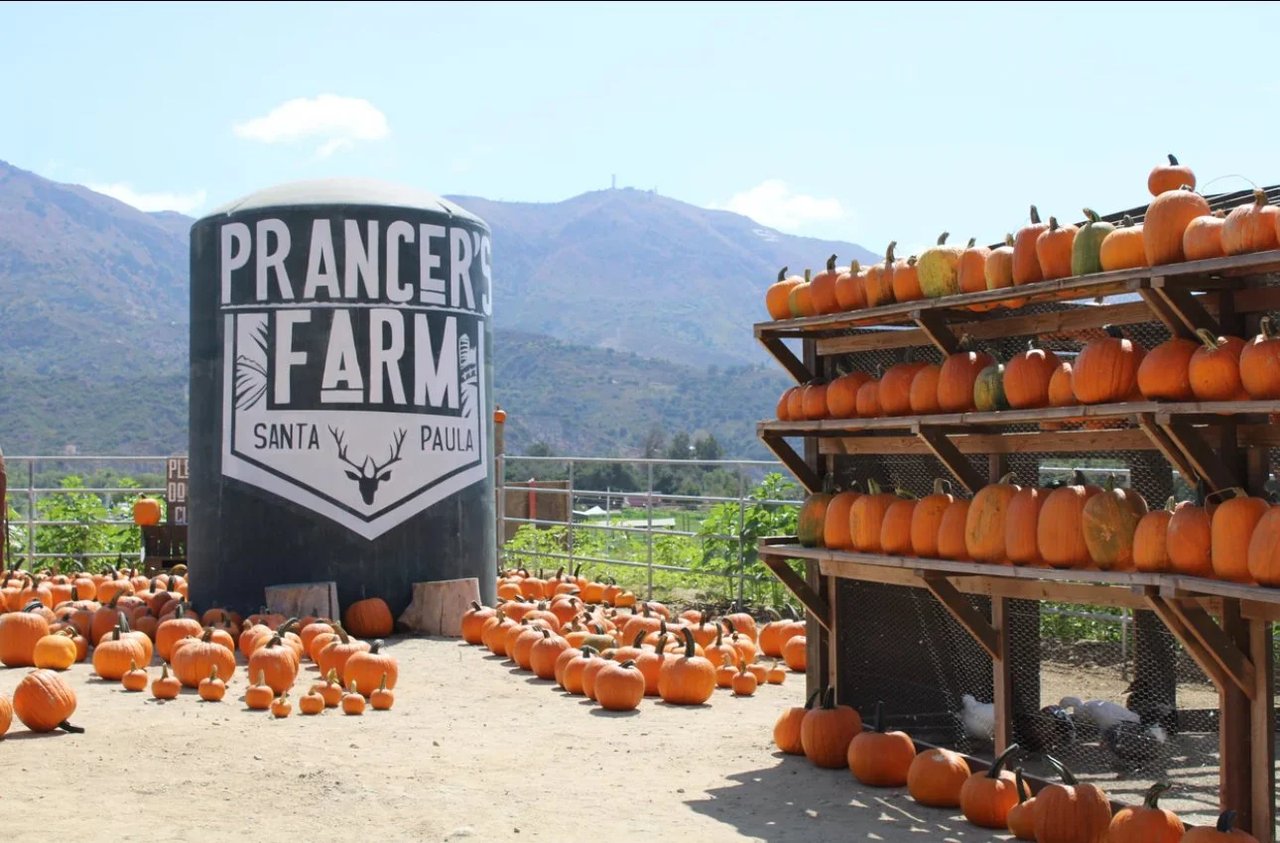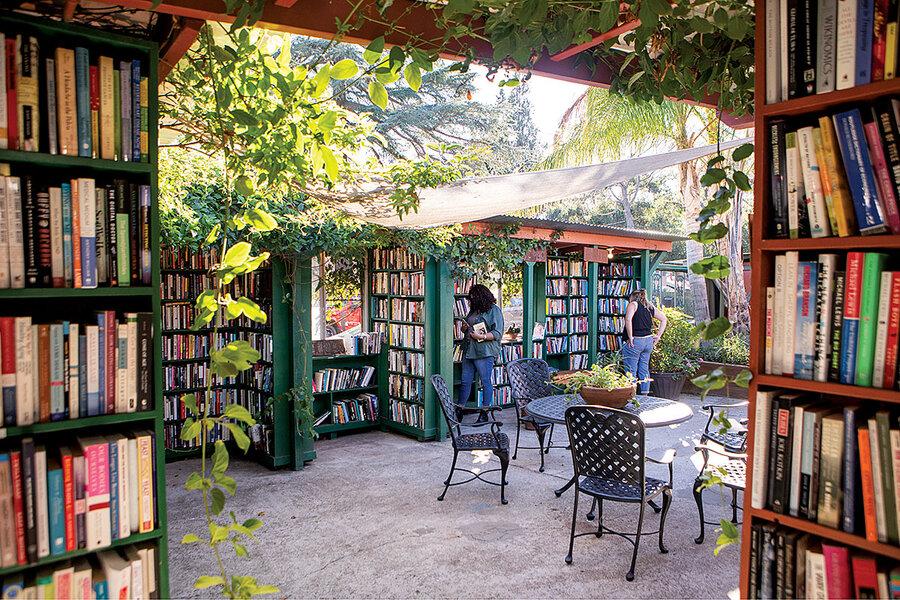
There's something unusual about arriving in Ojai.
You don't need a welcome sign to tell you that you've entered a different kind of place.
The road narrows into town. The mountains seem to surround everything. The downtown is compact enough to explore on foot, and the storefronts look remarkably different from those lining most Southern California commercial corridors.
There are bookstores. Galleries. Cafés. Small restaurants. Independent shops.
And noticeably fewer reminders of the corporate retail landscape that dominates so much of California.
It's tempting to explain Ojai as simply a charming small town.
But that misses the more interesting question.
How did a community this close to Los Angeles manage to develop such a different relationship with growth, commerce, and identity?
A Downtown That Was Designed to Feel Like Somewhere
Ojai's appearance isn't entirely accidental.
In 1917, wealthy industrialist and philanthropist Edward Drummond Libbey helped reshape the town's commercial center, working with architect Frank Mead to establish the Spanish Colonial Revival character that remains visible today.
The distinctive arcade, bell tower, and surrounding architecture became defining features of downtown Ojai.
More than a century later, they're still central to the town's identity.
The Ojai Valley Museum preserves the story of the valley's development, including the people and decisions that shaped its built environment.
What's interesting is that Ojai's downtown doesn't feel memorable because every building is spectacular.
It feels memorable because the buildings seem to belong together.
There's a visual continuity that makes the town recognizable.
And in a region where commercial development can often feel interchangeable, recognizability has become something valuable.
The Bookstore That Refuses to Behave Like a Bookstore
Perhaps no place captures Ojai's personality better than Bart's Books.
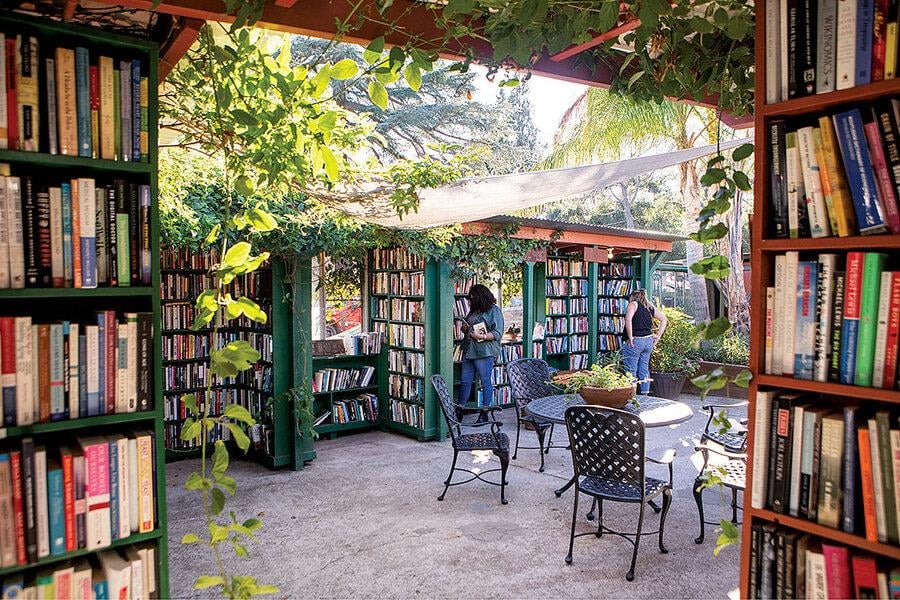
Founded in 1964, Bart's Books is famous for its outdoor bookshelves, open-air courtyards, and an atmosphere that feels closer to wandering through someone's eccentric private library than shopping in a conventional bookstore.
It's the kind of business that seems almost designed to challenge modern retail logic.
Books sit outdoors.
Customers browse without urgency.
The experience is as much about discovering something unexpected as finding a particular title.
In a world where nearly any book can arrive at your doorstep tomorrow, Bart's offers something online shopping can't replicate.
The pleasure of not knowing exactly what you're looking for.
And that's an important distinction.
Some businesses survive because they're convenient.
Others survive because the experience itself is the reason people come.
The Town That Actually Wrote Its Personality Into Law
Here's where Ojai becomes more than a picturesque destination.
The city has regulations specifically designed to limit certain chain businesses.
Under Ojai's Formula Business Ordinance, qualifying businesses with standardized menus, signage, merchandise, or appearances face restrictions, including permitting requirements and prohibitions on certain formats.
In other words, Ojai's independent character isn't simply the result of consumer preferences.
The community has made deliberate policy choices to protect it.
That doesn't mean everyone agrees with those choices.
Restrictions can create challenges for businesses, property owners, and residents who value convenience or additional commercial options.
But they reveal something important about the town.
Ojai has treated its commercial identity as something worth actively managing rather than leaving entirely to market forces.
And that raises an interesting question for communities everywhere:
At what point does making a town more convenient begin making it less distinctive?
A Community That Still Celebrates Being Itself
Even Ojai's annual community celebration has an unusual origin.
Ojai Day, traditionally celebrated in October, traces its roots to 1917, when residents gathered to recognize Edward Libbey's contributions to the town's transformation.
The celebration was revived in 1991 and continues as a community event featuring local vendors, entertainment, and activities.
More than a century after the original celebration, the town is still gathering around the identity established during that remarkable period of its history.
That's a surprisingly powerful idea.
Communities don't develop character simply because they have attractive buildings or beautiful scenery.
They develop character through the things people repeatedly choose to support.
The independent bookstore.
The locally owned restaurant.
The historic building that remains useful.
The public gathering place that continues bringing people together.
Over time, those choices become the personality of a place.
The Real Estate Question Nobody Talks About Enough
There's an interesting connection between all of this and real estate.
Buyers often focus on the measurable things.
Square footage. Lot size. Bedrooms. Renovations. Price per square foot.
Those things matter.
But they don't explain why two similarly sized homes in different communities can offer completely different living experiences.
The character of a town isn't included in the square footage.
Neither is the feeling of walking into a bookstore, recognizing the owner of a local café, or living near a downtown that looks unlike anywhere else.
Of course, that kind of lifestyle comes with trade-offs.
A smaller commercial district may offer fewer choices. Popular destinations can attract visitors and traffic. Preserving character can sometimes conflict with demands for new housing and economic growth.
There's no universally correct balance.
But Ojai offers an unusually clear example of what happens when a community decides that its identity should influence how it develops.
The ROGS Perspective
Perhaps the most interesting thing about Ojai isn't that it moves more slowly.
It's that the town has spent generations making decisions about what it wants to remain.
Its architecture was intentionally shaped.
Its independent commercial character has been protected through local policy.
And businesses like Bart's Books have become destinations precisely because they offer something that can't easily be standardized.
None of that means Ojai is frozen in time.
The town continues to change, just like every other community in Ventura County.
But it offers an important reminder.
Growth and progress aren't necessarily the same thing.
Sometimes progress means building something new.
Sometimes it means recognizing that something old still has value.
And sometimes the most distinctive thing a community can do is resist becoming interchangeable with everywhere else.
So the next time you find yourself wandering through downtown Ojai, take a moment to notice the details.
The architecture.
The storefronts.
The businesses that couldn't easily exist anywhere else.
Because what makes Ojai interesting isn't simply what has been built there.
It's also what the community has chosen not to become.