Southern California has always had a complicated relationship with fall.
The calendar says October.
The temperature occasionally says July.
Coffee shops put pumpkins on the menu. Stores fill their windows with orange leaves that didn't fall from any nearby tree. Somewhere, an air conditioner is running beneath a sign that says HELLO AUTUMN.
Then you drive into Santa Paula.
The mountains close in around the Santa Clara River Valley. Orchards stretch alongside the road. Farm equipment isn't decoration. Produce trucks aren't part of an autumn display.
And suddenly, fall feels a little less manufactured.
Because here, the harvest isn't a theme.
It's an industry.
There's a Difference Between Visiting a Farm and Living Around Farming
This is what makes October in this part of Ventura County interesting.
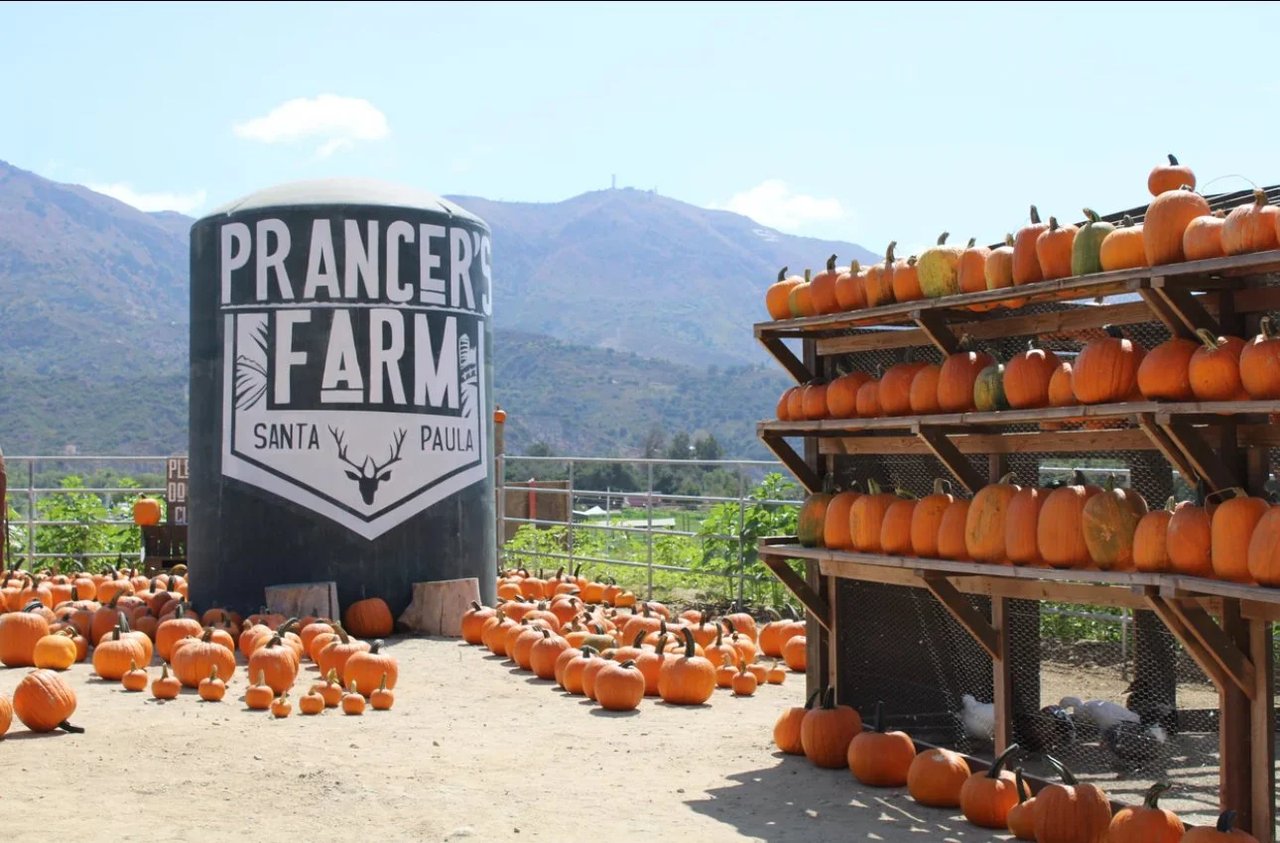
Families arrive at places like Prancer's Farm for pumpkins, hayrides and corn mazes. Its 2026 Fall Festival runs from late September into November on an actual working farm.
That's fun.
But drive away from the pumpkin patch and the agriculture doesn't disappear.
The fields keep going.
So do the orchards.
So does the work.
That's an important distinction, because in much of suburban Southern California, agriculture survives primarily as nostalgia.
In Santa Paula, it still helps explain the economy, landscape and identity of the place.
The Lemons Aren't There for Scenery
Just west of Santa Paula sits the original home of Limoneira.
The company began in 1893, and its original Limoneira/Olivelands Ranch remains in agricultural production today. Limoneira says the property encompasses roughly 1,744 contiguous acres, primarily producing lemons and avocados.
That's more than a historical footnote.
It means one of the defining features of the landscape around Santa Paula isn't a recreation of the area's agricultural past.
It is the agricultural present.
The rows of citrus aren't landscaping.
They're inventory.
The tractors aren't props.
They're equipment.
And those distinctions become especially noticeable in fall, when Southern California collectively starts pretending to be agricultural for a month.
Santa Paula doesn't really have to pretend.
There's Even a Museum for the Story
If you want to understand how deeply farming shaped this part of Ventura County, there's an unusually appropriate place to start.
The Museum of Ventura County's Agriculture Museum sits inside an 1888 mill building in downtown Santa Paula.
Inside are tractors, farming implements, exhibits and even a living beehive, all dedicated to explaining the region's farming and ranching history.
But perhaps the most interesting exhibit is outside the museum.
It's Santa Paula itself.
Drive around the valley and you can still see the relationship between the town and the land that helped build it.
That's increasingly unusual in Southern California.
October Makes the Contrast Hard to Miss
This time of year, people intentionally seek out the things that agricultural communities have always had.
Pumpkins.
Fields.
Barns.
Farm animals.
Hayrides.
Fresh produce.
Open land.
At Prancer's Farm, visitors can spend an October afternoon wandering a corn maze or picking out a pumpkin with mountains rising beyond the fields.
Then they can drive a few minutes and encounter commercial agriculture continuing beyond the festival gates.
That's what makes the experience different.
The attraction and the real thing exist side by side.
And Then There's Downtown
Santa Paula gets even more interesting when you leave the fields.
Because agriculture didn't just shape the land.
It helped shape the town.
Historic buildings, railroad infrastructure and the compact downtown reflect an era when communities developed much closer to the industries surrounding them.
The Agriculture Museum itself sits beside the railroad tracks, across from Santa Paula's old train depot.
That physical relationship tells a story.
Grow something.
Pack it.
Move it.
Build businesses around it.
Build a town around those businesses.
Eventually, what began as economics becomes identity.
This Is Also Why Santa Paula Feels Different to Live In
People sometimes talk about real estate as though houses exist independently from everything around them.
They don't.
You're buying into a landscape.
A history.
A pattern of development.
A relationship between neighborhoods and open land.
Santa Paula is one of the clearest examples in Ventura County.
Newer communities are appearing alongside an agricultural landscape that predates them by generations.
That creates something you don't find everywhere in Southern California: a city where the future is being built within sight of the industry that helped create its past.
Whether someone loves that combination is personal.
But it certainly isn't generic.
The ROGS Perspective
Maybe that's why fall feels particularly appropriate here.
In many places, autumn has become an aesthetic.
Pumpkin drinks.
Artificial leaves.
Harvest signs.
Decorative hay bales.
Santa Paula has all the seasonal fun too.
But behind it is something more interesting.
The harvest was here before the hashtag.
Agriculture has been shaping this valley for generations, and despite enormous changes across Southern California, it remains visible in everyday life.
So go get the pumpkin.
Take the hayride.
Get lost in the corn maze.
Take the family photo.
But on the drive home, look beyond the festival.
Look at the orchards.
Look at the fields.
Look at the mountains surrounding them.
Because in Santa Paula, the best part of fall may be realizing that much of what everyone came to experience for an afternoon...
was already here.