Imagine driving along the 101 near Oxnard.
To one side, there's traffic, commercial development, and the familiar movement of Southern California life.
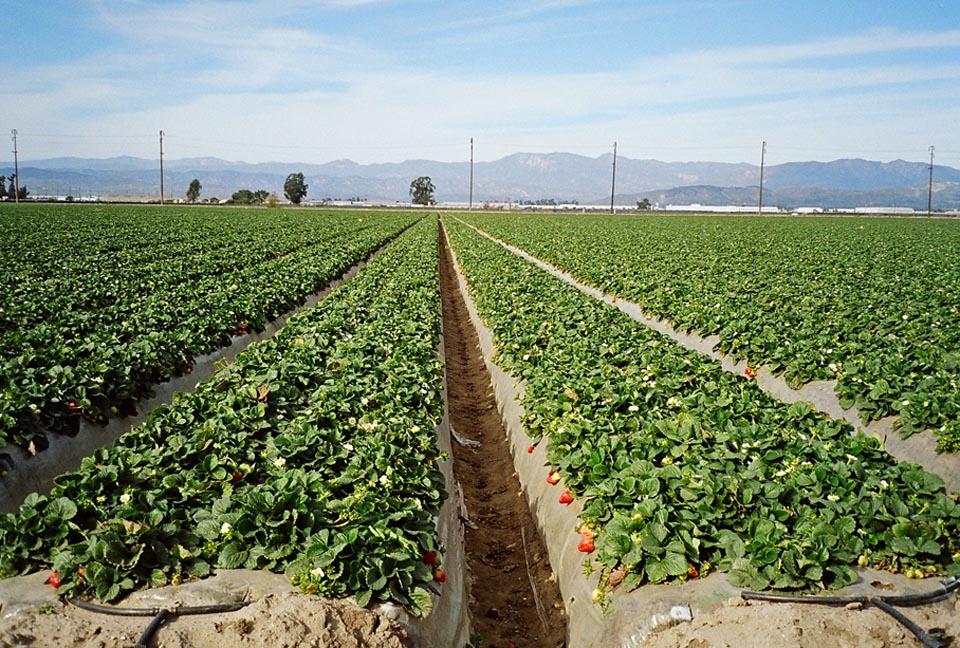
To the other, rows of low green plants stretch across the farmland.
Strawberries.
Nothing particularly surprising about that.
Until you discover what those fields are worth.
According to Ventura County's 2025 agricultural figures, strawberries generated nearly $808 million in gross crop value, making them the county's leading agricultural commodity.
That's not a typo.
And it isn't the total value of Ventura County agriculture.
It's strawberries alone.
Which raises an interesting question.
How did one of the most expensive regions in California become one of the country's most important places to grow a fruit that bruises so easily?
The Secret Is in the Weather
Most people think of California agriculture and imagine hot, sunny fields.
Strawberries have a different preference.
They thrive in moderate temperatures, and the coastal influence around Oxnard creates unusually favorable growing conditions.
Cool mornings. Ocean breezes. Relatively mild winters.
While inland regions experience dramatic seasonal temperature changes, coastal Ventura County offers a longer window for strawberry production.
The California Strawberry Commission identifies Oxnard as one of the state's important growing regions, with harvesting continuing through cooler months when production elsewhere becomes more limited.
That matters enormously.
Because in agriculture, timing isn't just about when something grows.
It's about when buyers need it.
And the ability to produce strawberries outside the peak growing season can create valuable opportunities for local farmers.
The same coastal weather that attracts people to Ventura County also helps make its farmland extraordinarily productive.
Why Strawberries Are So Much Harder Than They Look
Here's something worth thinking about the next time you buy a carton of strawberries.
They don't arrive at the grocery store because someone planted a field and waited.
Strawberry production requires careful coordination of planting schedules, irrigation, pest management, harvesting, cooling, packaging, and transportation.
And unlike crops that can be harvested mechanically with relative ease, fresh-market strawberries still depend heavily on skilled human labor.
The berries are delicate.
They don't all ripen at the same moment.
And once picked, they have a limited window to reach consumers in good condition.
That creates an unusually demanding business.
The University of California Cooperative Extension in Ventura County conducts research specifically focused on strawberry production, plant diseases, pests, and sustainable growing practices.
Behind those neat rows of green plants is an industry that depends on agricultural science, experienced workers, and extraordinary logistical precision.
It's much closer to running a carefully timed manufacturing operation than most people realize.
Except the product is alive.
And the weather gets a vote.
An $800 Million Crop Doesn't Mean $800 Million in Profit
This might be the most surprising part of the entire story.
Agricultural crop values measure the gross value of production.
They don't tell us how much money farmers actually keep.
Land is expensive.
Labor is expensive.
Water, equipment, transportation, insurance, and regulatory compliance all add costs.
And those expenses don't disappear when market prices fall.
Ventura County's 2025 agricultural reporting highlighted a difficult reality: despite the industry's impressive production value, rising operating costs continue to squeeze farm profitability.
That creates an interesting contradiction.
A field can produce an enormously valuable crop without necessarily delivering an enormous profit to the grower.
And in a county where agricultural land sits close to some of Southern California's most desirable residential communities, the economics become even more complicated.
The Strawberry Fields Are Part of the Real Estate Story
Think about what makes the Oxnard Plain visually distinctive.
You can travel between developed areas and suddenly find yourself looking across enormous stretches of working farmland.
That's unusual in a region as heavily populated as Southern California.
And it influences much more than the scenery.
Agriculture affects employment, transportation, land-use decisions, local businesses, and the physical separation between communities.
For homebuyers, those open fields can feel like a welcome break from continuous suburban development.
For farmers, the same land is a workplace with significant operating costs and economic risks.
For local governments, it represents an ongoing balancing act between agricultural preservation, housing needs, infrastructure, and economic development.
The strawberries aren't simply growing beside Ventura County's neighborhoods.
They're part of the reason those neighborhoods exist within the landscape they do.
There's Another Reason the Fields Matter
California produces the overwhelming majority of strawberries grown in the United States, and Oxnard is one of the regions helping supply that national market.
The California Strawberry Commission documents the industry's importance and the growing regions that make year-round availability possible.
That means the strawberries grown around Oxnard don't necessarily stay in Ventura County.
They become part of a much larger food supply chain.
A carton purchased hundreds or thousands of miles away may have started its journey in fields familiar to anyone who drives through this part of the county.
There's something remarkable about that.
A landscape local residents pass without much thought is connected to grocery stores and dinner tables far beyond California.
And behind every carton are the people whose work makes that connection possible.
The ROGS Perspective
Real estate conversations often revolve around what land could become.
A housing development.
A commercial center.
A new neighborhood.
A future investment.
But Ventura County's strawberry fields offer another perspective.
Sometimes land is already doing something extraordinarily valuable.
It's supporting jobs.
Producing food.
Sustaining businesses.
And contributing hundreds of millions of dollars to the regional economy.
None of that makes the challenges facing local agriculture disappear.
Farming remains a difficult business, and Ventura County will continue facing important decisions about how its land is used.
But the next time you're driving through Oxnard and see those familiar rows of strawberries, consider what's happening just beyond your windshield.
What looks like a quiet field is actually part of an enormously sophisticated economic system.
One shaped by climate, science, labor, transportation, and generations of agricultural experience.
And perhaps that's the most interesting thing about Ventura County.
Some of its most valuable real estate doesn't have a house on it.
It grows strawberries.