Imagine a railroad company planning a new route through Ventura County.
The tracks are coming. The engineers have identified where they want to build a station. The location makes sense.
There's just one problem.
The landowner won't sell.
That might sound like a minor obstacle in a major infrastructure project.
But in the Santa Clara River Valley during the 1880s, a decision like that could change the future of an entire community.
And according to the Fillmore Historical Museum, that's essentially how the story of Fillmore began.
The Town That Almost Wasn't There
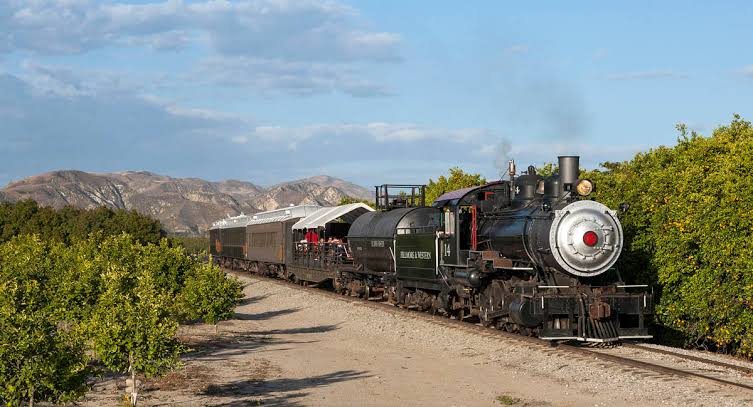
In 1886, the Southern Pacific Railroad was planning a route through the Santa Clara River Valley, connecting the Los Angeles region with Ventura and the coast.
The company needed stations along the way, generally spaced about ten miles apart.
One preferred location was a small settlement called Cienega, east of present-day Fillmore.
Cienega already had a store, a stagecoach stop, a post office, and a school.
It seemed like a logical choice.
But the landowner, Rush Ealy, refused to sell the property the railroad needed.
So Southern Pacific looked elsewhere.
Nearby, the Sespe Land and Water Company was developing a large tract of land and welcomed the opportunity.
The railroad established its stop there instead.
And it named the location after one of its executives, Jerome Fillmore.
A town that would eventually become home to thousands of people began with a railroad company changing its plans.
When the Railroad Came, the Town Followed
The first train crossed the Sespe Creek bridge on January 4, 1887.
Regular passenger service between the valley and Los Angeles began the following month.
Before the railroad arrived, much of the surrounding area was ranching country.
But a train station changed the economics of living there.
Farmers could ship their crops to distant markets.
Merchants could receive goods more efficiently.
New residents could travel between communities without depending entirely on horses and rough roads.
Land that had once seemed relatively isolated suddenly became connected to Southern California's growing economy.
The railroad depot became the center of the emerging community.
Businesses appeared nearby. Streets were laid out. Homes followed.
Fillmore was officially established as a town in 1888.
And something fascinating happened.
The location of a railroad stop began determining where people would live, shop, and build their businesses.
The Downtown That Still Follows the Tracks
Walk through downtown Fillmore today and you'll notice something different from many newer Southern California communities.
The historic streets feel compact.
Buildings sit close to the sidewalks.
The downtown has a recognizable center rather than being spread across a collection of shopping centers.
That's partly because Fillmore developed around a transportation hub long before automobiles became the dominant way Americans traveled.
The Ventura County Cultural Heritage Board documents how the railroad shaped the community's early settlement and commercial development.
Main Street and Central Avenue became important parts of the growing town.
The depot wasn't simply a place where trains stopped.
It was the organizing point for an entire community.
And more than a century later, that original pattern remains visible.
The Train Station That Was Saved for $1.05
Here's another detail that sounds almost impossible today.
In 1974, the historic Southern Pacific depot faced an uncertain future after railroad operations declined.
A local teacher and historian named Edith Jarrett stepped in.
She purchased the depot for one dollar.
The additional five cents?
Sales tax.
For a total of $1.05, a significant piece of Ventura County history was preserved.
The building was moved across the street from its original location and became part of the Fillmore Historical Museum.
Today, visitors can explore the preserved depot and exhibits documenting the valley's history.
It's a remarkable example of how one person's determination can protect something that might otherwise disappear.
First, one landowner's refusal helped change where a town developed.
Nearly 90 years later, another resident's decision helped preserve the building that started it all.
The Railroad Never Completely Disappeared
Although regular passenger service ended in 1935, the railroad corridor remains an important part of Ventura County's transportation history.
Today, the Ventura County Transportation Commission oversees the Santa Paula Branch Line, a 32-mile corridor connecting the eastern Ventura area through Santa Paula and Fillmore toward Piru.
The corridor supports freight and other specialized rail activities, with portions also associated with tourism and film production.
The commission acquired the line in 1995, preserving it for transportation and other potential public uses.
That means a route originally established in the nineteenth century still has a place in the county's long-term planning.
The trains may have changed.
The communities certainly have.
But the geography established by those original tracks continues to matter.
What a Railroad Can Teach Us About Real Estate
There's a broader lesson hiding inside Fillmore's history.
We often assume towns grow because people want to live there.
But historically, the relationship frequently worked in reverse.
Transportation infrastructure helped determine where people could live and work.
A railroad station attracted businesses.
Businesses attracted workers.
Workers needed housing.
Housing created neighborhoods.
And those neighborhoods eventually became communities with their own identities, traditions, and real estate markets.
Today, we see similar forces around freeway access, employment centers, and major transportation investments.
Infrastructure doesn't determine everything about a community's future.
But it can influence development patterns for generations.
Fillmore is a particularly vivid example because so much of its original character remains recognizable.
The ROGS Perspective
There's something extraordinary about the idea that a community's history can turn on such a small decision.
A railroad company wanted one location.
A landowner refused.
The company chose another site.
And nearly 140 years later, Fillmore is a city with its own downtown, neighborhoods, businesses, schools, and generations of family history.
The story reminds us that the places we call home aren't always the result of carefully designed master plans.
Sometimes they're shaped by negotiations, geography, economic opportunities, and decisions that seem ordinary at the time.
Real estate is often discussed in terms of what a property is worth today.
But understanding a community means appreciating how it came to exist in the first place.
And in Fillmore, that story begins with a train, a piece of land, and a man who wouldn't sell.
Sometimes the most consequential thing someone can do for a community that doesn't yet exist is simply say no.